
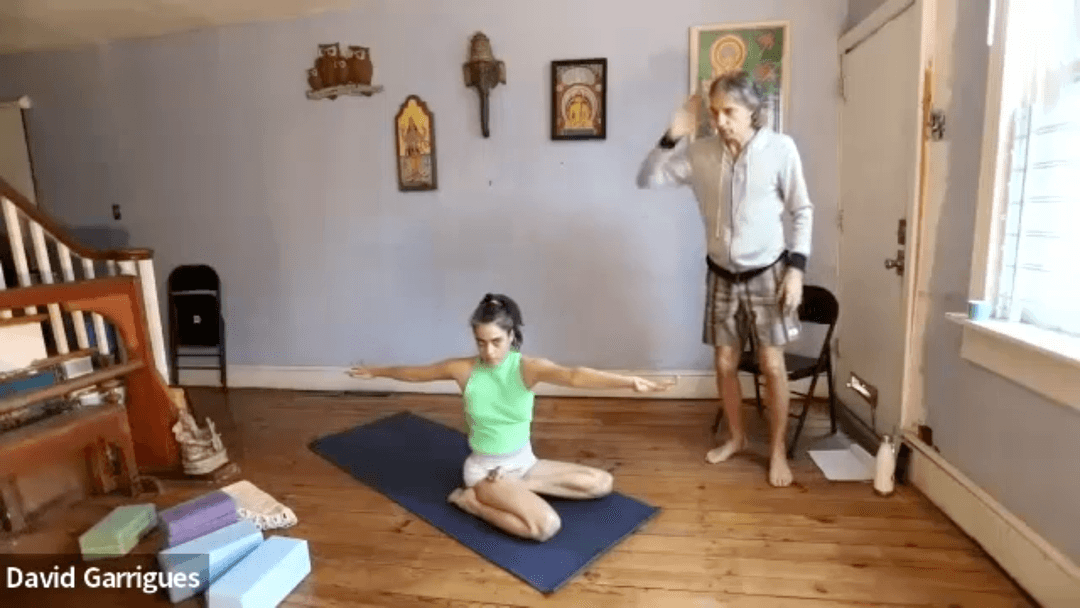

Bharadvajasana Class 2
6 mins
This class develops Bharadvājāsana by rooting it in the essence of seated meditation poses. We begin in Daṇḍāsana and Half Lotus, emphasizing the base: two thighs grounded, pelvis supported on height if needed, and at least 50% of the weight carried by the legs. From this foundation, add spinal rotation with simple arm positions (hands clasped overhead, Namaste arms, or open arms) before attempting leverage. Once the base twist is secure, layer in the Lotus bind: clasp the Lotus foot, separate the knees for stability, and use the opposing arm either to pull up and lift the navel or to brace under the outer thigh, throwing the torso forward to deepen the spiral. Throughout, the bind is treated as non-essential—helpful if available, but never at the expense of symmetry or leg grounding. We repeat the sequence with reduced height, eventually sitting flat if the legs can stay weighted without tipping back. The focus is always on foundation first, then spine, then arm variations. The takeaway: Bharadvājāsana is less about flashy leverage and more about maintaining the Raja Yoga seat while exploring Hatha Yoga’s twist—steady thighs, neutral pelvis, coiling spine.