
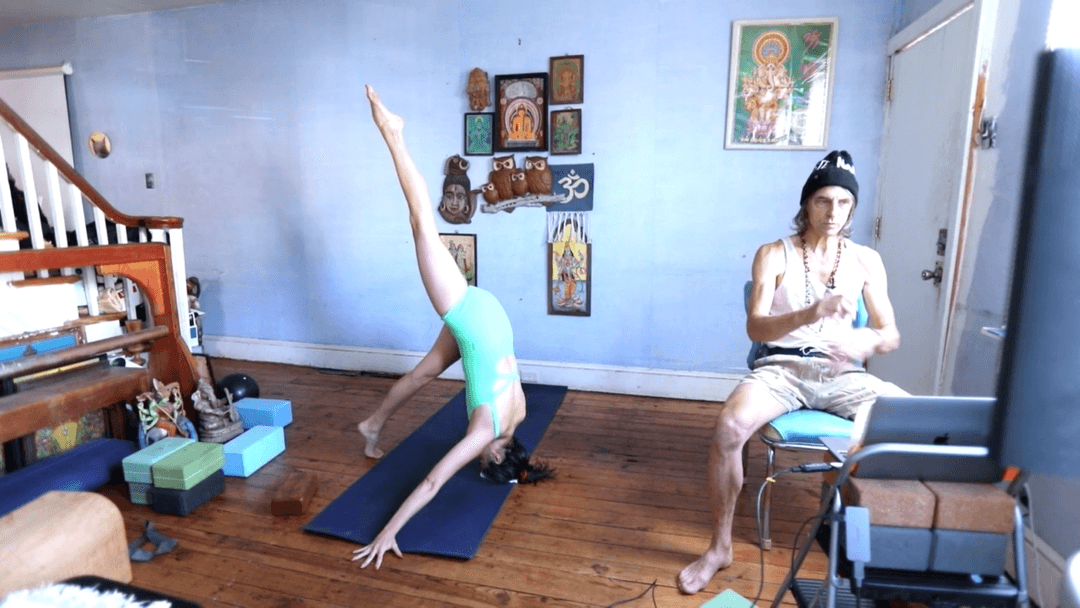

Seven Headstands Class 3
20 mins
This class explores the seven headstands of the Second Series, approached as progressions of the root Śīrṣāsana. We begin by clarifying why these postures come at the end of the series: they challenge not only balance but also the neck’s stability and strength. The teaching emphasizes that setup is equal to or greater than the pose itself—working the foundation builds the neck and upper body needed for safe practice . Students train the tripod headstand first: stamping the hands, bracing the arms, and finding the true center of the tripod (one head, two hands) before even attempting to lift the legs. From there, variations expand outward—arms wide, bound-hand versions, and less efficient tripods—all of which test the ability to keep weight in the arms while protecting the neck. Wall support and small height under the head are suggested for safety and clarity. The essence: the seven headstands aren’t separate tricks but refinements of the root, each demanding discipline in setup, arm channeling, and weight distribution. By valuing the foundation, students transform fear into steadiness and discover a fearless, aligned vertical.