
Foundation First

This 8-day course teaches the most essential principle in yoga: start with your foundation. Using si...

This 8-day course teaches the most essential principle in yoga: start with your foundation. Using six key postures and their transitions, you’ll learn how to ground your skeleton, prioritize support, and maintain stability as you deepen each pose. By focusing on the base, you take a powerful step toward mastering Asana Vidya—the knowledge of posture—and discover strength, clarity, and inspiration in your practice. Foundation First is a technique course that slows down key poses and transitions from the Primary Series so you can build a strong, intelligent foundation. Each class focuses on specific posture families (Sun Salutes, standing, forward bends, backbends, balances, inversions, and lotus work) using props, clear setup positions, and logical progressions.

Course Content
Classes
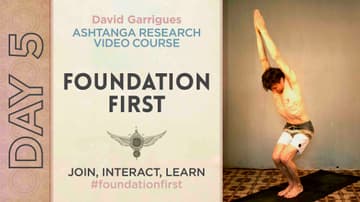
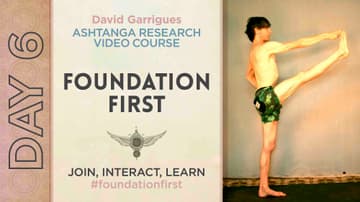
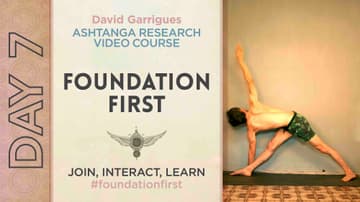
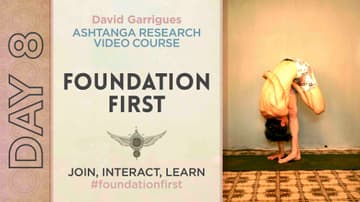
Props Set-Up
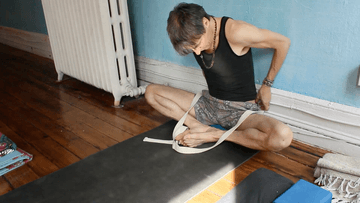
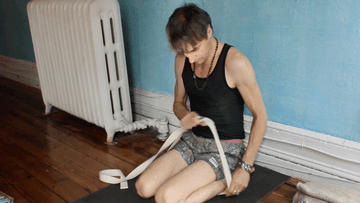
Interviews
Frequently Asked Questions
- What is Foundation First?
- Foundation First is an 8-session technique course that slows down key poses and transitions from the Primary Series so you can build a strong, intelligent foundation. Each class focuses on specific posture families (Sun Salutes, standing, forward bends, backbends, balances, inversions, and lotus work) using props, clear setup positions, and logical progressions.
- Who is this course for?
- It’s for dedicated Ashtanga students who feel like their vinyasas and poses are wearing them down instead of building them up. It’s especially helpful if you want to understand what your legs, arms, and spine should actually be doing in the poses so practice feels more supported, efficient, and sustainable over time.
- How is the course structured?
- There are 8 classes, each about 30–40 minutes. Every session centers on a specific foundation theme (for example, Surya Namaskara positions 1–6, standing forward bends, side-plane standing poses, backbends, balances, or lotus work), and ends with a short seated meditation to integrate what you’ve learned.
- Do I need to already know the full Primary Series?
- No. You’ll work with core postures from the Primary Series and some Second Series backbends, but the focus is on foundation and setup, not running the full sequence. The course will support you whether you’re still learning the series or have been practicing for years and need to rebuild your base.
- What props do I need?
- You’ll use blocks, a chair, and the wall. These props are not shortcuts; they’re teaching tools that clarify where your weight goes, how to organize your limbs, and how to safely access actions like Chaturanga, forward bends, backbends, and inversions.
- What will I learn about Surya Namaskara?
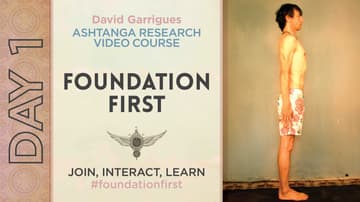
- You’ll study the nine positions in detail, starting with a block between your thighs in Samasthiti to connect your legs and feet to the ground. You’ll then work on Chaturanga, Upward Dog, and Downward Dog with blocks and a chair to create one strong line through your body, and you’ll practice the Crouch and Spring as the engine for powerful transitions.
- How does the course help my standing poses?
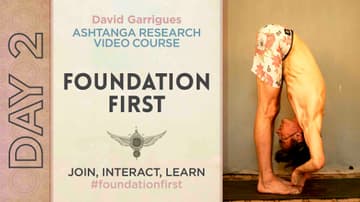
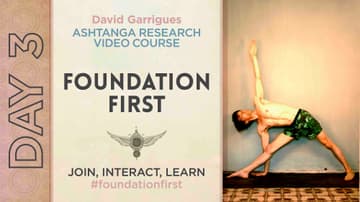
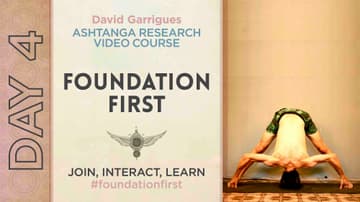
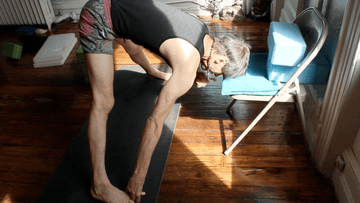
- You’ll work deeply with Padangusthasana and Padahastasana, Trikonasana, Parivrtta Trikonasana, Parsvottanasana, Utthita Parsvakonasana, Prasarita Padottanasana, and Utthita Hasta Padangusthasana. Using the wall, blocks, and a chair, you’ll train leg foundation, side-plane alignment, spinal extension and rotation, and the push–pull connection between fingers and toes so your standing poses become clear, stable, and strong.
- What about forward bends and hamstring work?
- You’ll explore the foundational standing forward bends and then apply those same principles in seated postures like Paschimottanasana, Upavistha Konasana (A and B), Ubhaya Padangusthasana, Urdhva Mukha Paschimottanasana, and Supta Konasana. The emphasis is on building a strong leg and arm base, projecting the spine forward, and folding from a clear, supported stance instead of collapsing.
- How are backbends taught in this course?
- Backbending day focuses on Purvottanasana, Urdhva Dhanurasana, and key Second Series backbends such as Shalabhasana, Dhanurasana, and Ustrasana. You’ll learn universal leg actions that apply to all backbends and use setup variations and props so your spine moves into extension from strong, grounded legs rather than from brute force in the lower back.
- Does the course include balance and core work?
- Yes. You’ll work extensively with Utthita Hasta Padangusthasana and Supta Padangusthasana, clarifying how fingers, toes, arms, and legs work together to support balance in different phases of the pose (front, side, and back). There is also a related core-strengthening drill linked to Navasana, so you build the internal support needed for standing balances and transitions.
- Are inversions and Shoulderstand/Headstand included, and are they safe for beginners?
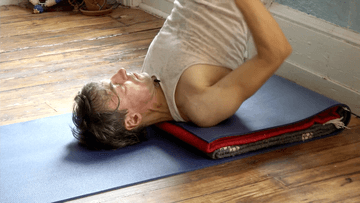
- You’ll work on Shoulderstand with the wall, Shoulderstand with Lotus, and a progressive approach to Headstand. The emphasis is on shifting weight into the arms and hands, organizing the shoulder girdle, and finding a clear foundation before going deeper. This makes the inversions much more accessible and safer, even if you’re still new to them.
- How does the course approach lotus poses and hip opening?
- You’ll study Ardha Baddha Padmottanasana as a key posture for safe access to Padmasana, focusing on the setup phase before the forward bend. From there, you’ll transfer that foundation to Ardha Baddha Padma Paschimottanasana and into Shoulderstand with Lotus and seated Padmasana, so lotus work is grounded in alignment, balance, and hip safety rather than forcing the position.
- What role does the vinyasa count play in this course?
- On some days you’ll review the Surya Namaskara vinyasa count and practice moving through the sequence with more awareness of timing and breath. The goal is to connect the technical foundations you’re learning to the traditional vinyasa structure so your practice becomes both precise and rhythmical.
- Do I have to do the days in order?
- You can follow the course in order to build step by step, or return to specific days as needed. For example, you might repeat the Surya Namaskara and Chaturanga session for a while, or cycle back to the backbending or standing balance days as “tune-up” classes.
- Is there any meditation or is it just physical technique?
- Each class ends with a short seated meditation—often in Bound Angle, Virasana, Padmasana, or with legs up the wall. The technical work in the poses is meant to lead you naturally into internal focus, steady breathing, and a more meditative state.
- I’m not very strong or flexible. Will I be able to keep up?
- Yes. The classes are 30–40 minutes and built around props, incremental setup positions, and clear actions rather than demanding full expressions of every pose. You’re learning how to build strength, mobility, and balance in steps so your practice becomes more accessible, not less.
- I’m dealing with wear-and-tear from rushed vinyasas. Will this help?
- That’s exactly what this course is designed to address. By dissecting Surya Namaskara, standing poses, forward bends, backbends, balances, and inversions into clear setups and foundational actions, you reduce random strain and replace it with deliberate, repeatable patterns that protect your joints and support long-term practice.
- How will Foundation First change the way I practice overall?
- You’ll come away with a clearer sense of what “foundation” actually means in each family of poses: where to put your weight, how to organize your limbs, how to prepare before moving, and how to link poses with the Crouch and Spring. That understanding carries into every Surya Namaskara, every standing pose, every backbend, and every inversion you do, making your entire practice more grounded, powerful, and sustainable.